
Business
Global Solar Stocks Jump as Democrats Hold Early US Midterm Lead
By Marcus Chen
Advertisement · Why this ad?
Marcus manages the day-to-day editorial workflow across all brands, coordinating coverage assignments and ensuring editorial standards are met. He previously served as city editor at the Pioneer Press and holds a degree in Political Science from Carleton College.
More from Marcus →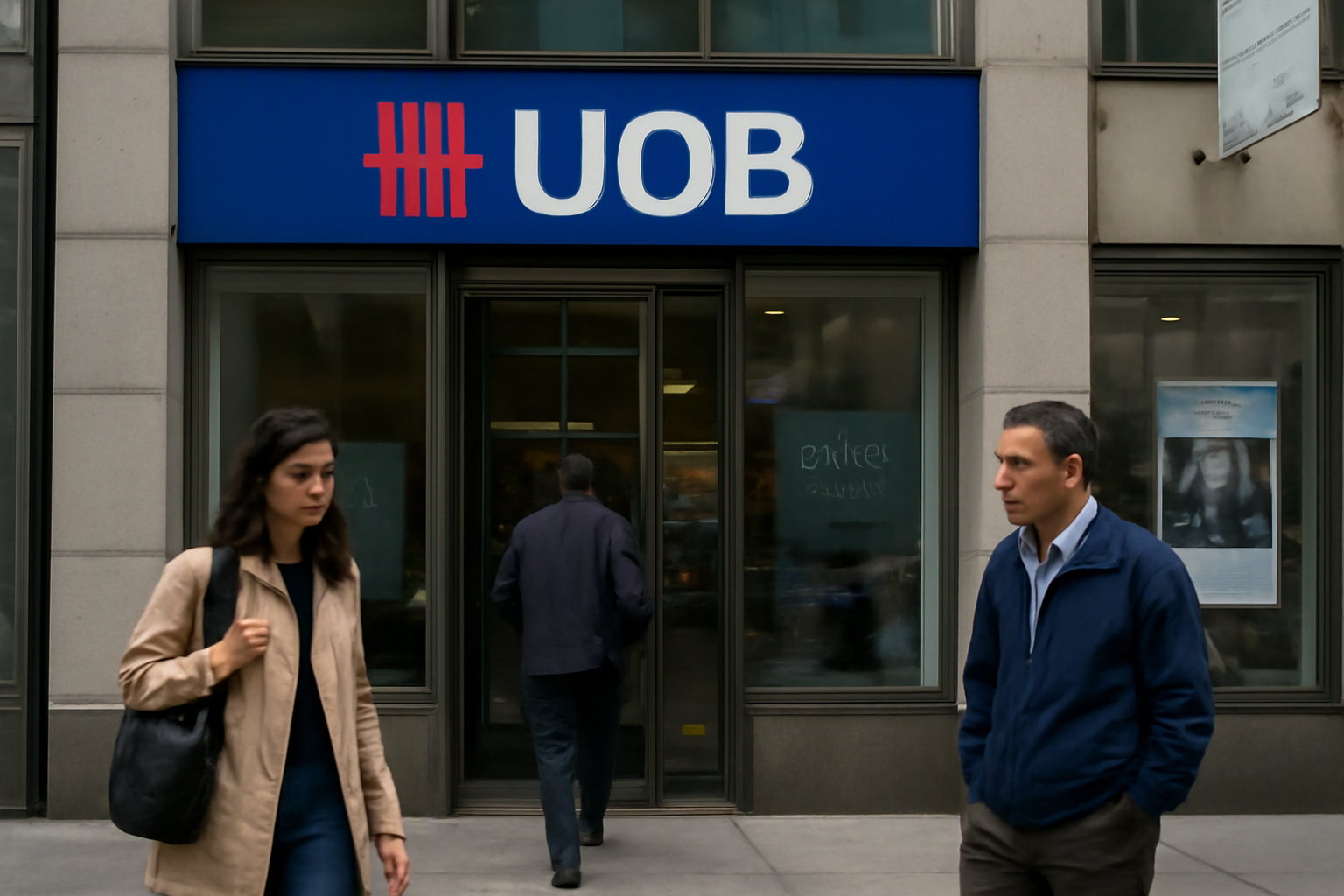
In the heart of Singapore's bustling financial district, United Overseas Bank Ltd. (UOB) is facing a reality check. The bank's third-quarter profit figures were released, revealing a significant dip that has left investors and analysts scrutinizing the numbers. While lending and fees showed promise, a notable decline in trading and investment income cast a shadow over UOB's overall performance.
UOB reported a third-quarter profit of S$1.01 billion, falling short of analysts' expectations of S$1.08 billion. The results were primarily impacted by a 20% drop in trading and investment income, which fell to S$256 million from S$320 million a year earlier. This downturn came despite a robust performance from the bank's lending operations, which saw a 15% increase in net interest income, reaching S$1.54 billion.
The bank attributed the decline in trading income to volatile market conditions that hindered its ability to capitalize on trading opportunities. UOB's Chief Financial Officer, Kieran O'Connor, noted that while the bank's core lending business remains strong, the fluctuations in trading income were unexpected and challenging.
The decline in trading income is not isolated to UOB; it reflects broader trends in the banking sector as interest rates fluctuate and market volatility increases. Banks globally have been grappling with similar challenges, leading to a cautious outlook for the remainder of the year. Analysts at Reuters Finance highlighted that UOB's performance is a microcosm of the difficulties banks face amid changing economic conditions.
In addition to trading income, UOB's investment income also took a hit, contributing to the disappointing results. The bank's investment portfolio has faced challenges, leading to lower returns compared to previous quarters. This situation raises questions about UOB's strategy moving forward and whether adjustments will be made to stabilize income streams.
For the residents of Singapore and the broader Southeast Asian community, UOB's performance has implications that extend beyond the bank's balance sheet. As one of the largest banks in the region, UOB plays a crucial role in supporting local businesses and families through lending and financial services.
The decline in profitability could lead to tighter lending standards, which may affect small and medium-sized enterprises (SMEs) that rely on UOB for financing. These businesses are the backbone of Singapore's economy, and any reduction in available credit could hinder their growth and stability. UOB has expressed its commitment to supporting local businesses, but the current financial landscape presents challenges that could impact future lending.
Local business owners have expressed concern over the potential impact of UOB's performance on their operations. Jane Lim, owner of a small café in downtown Singapore, stated, "We depend on banks like UOB for our daily operations. If lending becomes stricter, it could be tough for us to keep our doors open." Such sentiments echo throughout the community, highlighting the interconnectedness of banking performance and local economic health.
Similarly, Rajesh Kumar, who runs a tech startup, shared his worries: "As a young entrepreneur, I rely on UOB for funding to innovate and grow. If they tighten lending, it could stifle our growth and limit our ability to create jobs. We need banks to support us, especially in challenging times."
Singapore's economy is characterized by a vibrant mix of industries, including finance, technology, and tourism. The financial sector, where UOB plays a significant role, is integral to maintaining the economic stability and growth of the nation. A decline in the financial performance of major banks like UOB can create a ripple effect, impacting not just businesses but also employment rates and consumer confidence.
For instance, many SMEs are reliant on credit lines to manage cash flow, especially during off-peak seasons. If UOB tightens its lending criteria, these businesses may struggle to navigate their operational challenges, potentially leading to layoffs or even closures. This scenario raises alarms not only for business owners but also for employees and their families who depend on these jobs for their livelihoods.
The impact of UOB's performance can also be felt in the housing market, as many families depend on loans from the bank to purchase homes. A slowdown in lending could lead to a decrease in property transactions, which would further affect the local economy and the construction sector.
Looking ahead, UOB faces critical decisions regarding its strategic direction. The bank has indicated that it will focus on enhancing its core lending operations while exploring opportunities to diversify its income streams. Analysts suggest that UOB may need to invest in technology and innovation to adapt to changing market conditions and customer expectations.
In a recent statement, UOB's CEO, Wee Ee Cheong, emphasized the bank's commitment to resilience and adaptability in the face of challenges. "We will continue to prioritize our customers and their needs while ensuring that we remain competitive in the market," he said.
To navigate the current economic landscape, UOB may look towards innovative financial products and services that cater to the evolving needs of its customers. This could include digital banking solutions that enhance customer experience and streamline operations for SMEs. Furthermore, UOB could consider partnerships with fintech companies to leverage technology and improve its service offerings.
Additionally, UOB's management may explore geographic expansion or diversification into new markets as a means to mitigate risks associated with local economic downturns. Such strategic initiatives could not only bolster UOB's revenue streams but also reinforce its position as a leading financial institution in Southeast Asia.
Moreover, UOB could implement community engagement programs aimed at supporting local enterprises and fostering entrepreneurship. By investing in the local economy, UOB can strengthen its ties with the community and reinforce its brand as a socially responsible institution.
UOB's third-quarter results serve as a reminder of the volatility that can impact financial institutions. While the bank's core lending business remains strong, the decline in trading and investment income highlights the need for a balanced approach to revenue generation. As UOB navigates these challenges, its decisions will be closely watched by analysts, investors, and the community it serves.
As the financial landscape continues to evolve, UOB's ability to adapt and respond to market changes will be crucial for its long-term success. For the people of Singapore, the bank's performance is not just a matter of numbers; it reflects the health of the local economy and the livelihoods of families and businesses. The stakes are high, and the community is keenly aware that the path UOB chooses will have lasting implications for the economic fabric of Singapore.
By Marcus Chen

By Marcus Chen

By Katherine Langford

By Marcus Chen